
East High Administrators Didn’t Report Student Rape, DA Charges
Five people, including the principal who retired after the cheerleading splits scandal, and four current administrators, have been charged.

Five people, including the principal who retired after the cheerleading splits scandal, and four current administrators, have been charged.
Denver City Council president Albus Brooks, who had surgery for cancer in 2016, has revealed the recurrence of the disease. Surgery to remove a newly discovered tumor has been scheduled for the first week of May.
Two leading civil-rights law firms have joined forces to sue the City and County of Denver and Denver police officer Jeffrey Motz in regard to the fatal shooting of Dion Damon, who was gunned down in broad daylight near the Denver Art Museum two years ago this month. The lawsuit alleges that Motz’s “grossly excessive” killing of Damon, a bank robbery suspect who was unarmed at the the time of the incident, was followed by an elaborate Denver Police Department cover-up, and adds that the officer had previously slain two people while on the job yet was only disciplined on a separate occasion when he didn’t squeeze his trigger.
One of the most frequent questions we at Westword hear is: “Where do my marijuana tax dollars go?” Now, a new animated video created by Marijuana Industry Group, whose executive director, Kristi Kelly, has become the face of the cannabis business in Colorado, gets closer to the truth of the matter than anything has in a long, long time. See it here.
In recent weeks, stories about sexual harassment allegations aimed at Denver Mayor Michael Hancock, as well as state legislators Randy Baumgardner (who dodged expulsion from the general assembly) and Steve Lebsock (who didn’t), show that even powerful figures aren’t immune from criticism over improper behavior. And that’s proving to be the case with offenders who are no longer among the living, too. Witness the decision by Colorado College to rescind an honorary degree bestowed more than a century ago on former school president William Slocum, and the stripping of his name from a campus building. These moves were made because of what CC’s board of trustees describe as “overwhelming and uncontroverted evidence that Slocum engaged in instances of sexual misconduct and egregious sexual assault while he was president of the college.”
Seven Colorado cities currently prohibit pit bulls, with such regulations resulting in thousands of dogs being euthanized in Denver alone. But the number of bans could be reduced by one within weeks. Tonight, Castle Rock’s town council will hear the first reading of a new animal ordinance that repeals breed-specific legislation, and if it moves to the next stage, as expected, it could become law as soon as next month. Advocate Jen Dudley hopes the new rules serve as a template for repealing and replacing the bans in Denver and beyond.
A new analysis of rent growth in the United States reveals that prices in Denver went up 48.3 percent from 2010 through the end of last year. The increase is the fourth highest in the United States during that period, behind only three cities in California’s Bay Area.
No one was surprised when former state treasurer Cary Kennedy and Representative Jared Polis landed spots on the ballot as gubernatorial candidates via April 14’s Colorado Democratic Party state assembly, the complete results of which are on view below. But the Colorado Republican Party state assembly, held on the same day, contained a stunner. Former Parker mayor Greg Lopez, who few political observers took seriously, knocked state attorney general Cynthia Coffman out of the guv sweepstakes based largely on the power of a single speech.
Ever since the Denver Post announced that it would be laying off thirty employees, or approximately one-third of its newsroom staff, readers have worried about the venerable broadsheet disappearing entirely. And while such a fate doesn’t seem imminent, particularly given the good will generated by the paper’s bold editorial attack on its “vulture” hedge fund owner, Alden Global Capital, earlier this month, the difficulty of keeping a print newspaper alive in the 21st century is very real, as illustrated by the following list of publications that have gone bust since the dawn of the millennium.
Although “Ditch the Ditch” protesters haven’t given up on stopping the sprawling and controversial Central 70 project, the Colorado Department of Transportation is moving full steam ahead, with a goal of getting underway in earnest this summer. To help prepare metro-area drivers in general, and especially commuters who travel along Interstate 70 east of I-25 on a daily basis, for what CDOT insists will be coming soon, we reached out to Rebecca White, Central 70’s communications director, who offers a preview of a process that’s expected to take well into the next decade to complete.
The latest round of layoffs at the Denver Post prompted a mutiny of sorts at the paper, with editorial page editor Chuck Plunkett masterminding a package of attacks on Alden Global Capital, its “vulture” hedge fund owner. Plunkett and company want someone to purchase the Post and invest in its future rather than simply watching it die in slow motion, and Colorado Springs publisher John Weiss would like to help by putting together a group of investors to do just that.
Second-term state treasurer Walker Stapleton says one of the main reasons he’s running for governor of Colorado in 2018 is because he believes the state is at a crossroads, and if the wrong policies are put in place, the current economic boom may prove short-lived. He explains why and offers what he sees as solutions in the following in-depth interview.
In 2016, Colorado voters passed Amendment 70, which established an incremental increase in the state’s minimum wage culminating in a $12-per-hour rate by 2020. But a proposal just introduced in the Colorado general assembly has the potential of giving that amount an additional boost in some locations. The legislation, accessible below, would empower towns, cities or counties in Colorado to set their own minimum wage based on how expensive it is to make ends meet there.
Nearly two months after the tragic February 14 shooting at Marjory Stoneman Douglas High School in Parkland, Florida, the debate over the proliferation of guns in the U.S. continues to rage. But while mass casualty events grab the headlines, individual incidents of gun violence, many of which attract little attention, result in fatality figures that are just as shocking. A disturbing example: Since last July, the same number of teenagers have been shot to death in Colorado as were slain at MSDHS.
Hot on the heels of a groundbreaking lawsuit over Salmonella-tainted kratom that targeted a Colorado Springs store, the Colorado Department of Public Health and Environment has announced the recall of assorted products made from the popular but controversial pain-relieving herb. But while the ostensible reason for the recall involves the fear of Salmonella contamination, the CDPHE acknowledges that no illnesses have been reported in connection with the lot numbers in question, and the Food and Drug Administration statement highlighted in its news release focuses on the dangers of kratom in general, suggesting the possibility that broader seizures of the product might be in the offing.
Cynthia Coffman is Colorado Attorney General, but she’d like to be the state’s next governor. In the following in-depth interview, she lays out the case for why voters should throw their support behind her candidacy.
What is being touted as the first lawsuit over kratom tainted with Salmonella, the subject of a nationwide health warning issued in February by the federal Centers for Disease Control and Prevention, in conjunction with the Food and Drug Administration, targets Soap Korner, a store in Colorado Springs. The suit, accessible below, maintains that plaintiff Ashley Lemke, who lives in North Dakota, was hospitalized after consuming kratom products ordered from Soap Korner’s website that later tested positive for Salmonella.
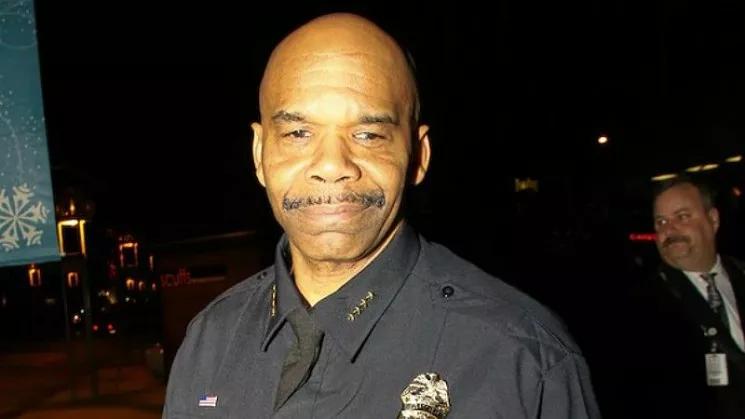
Denver Police Chief Robert White has received the equivalent of a warning from Mayor Michael Hancock regarding two internal affairs investigations into events that took place in 2016 and 2017. Nick Rogers, the president of the Denver Police Protective Association, the city’s most powerful police union, calls the decision “absurd.”
As of late last year, rent prices finally seemed to be moderating in Denver and its neighboring burgs following a long period in which rental costs continued to go up and up and up in the Mile High City’s red-hot housing market. But the latest data suggests that bargain hunters’ hopes have been squashed again, with rents across the metro area again heading upward, with many of the places analyzed notching double-digit bumps over this time in 2017.
We spoke with every major candidate running in Colorado’s gubernatorial election ahead of the state assemblies.
Attorney Anne Sulton says she’s calling for a review of all lawyers involved in Denver’s $75,000 settlement with Detective Leslie Branch-Wise because of concern that the cash may have been intended to pay for the latter’s services as a witness in a trial over a lawsuit filed by fired city employee (and Sulton client) Wayne McDonald that never actually took place.
For decades, the University of Colorado Boulder student government, known as CUSG, has been among the most powerful organizations of its type in the country, overseeing cost centers valued in excess of $20 million per annum. Last week, CU Boulder administrators announced their intention to strip all but a token amount of that responsibility from the group, only to temporarily back down in the face of protests by students and former CUSG members led by state senator Steve Fenberg. But Fenberg fears Chancellor Phil DiStefano and his staff plan to push through their proposal over the summer, when they have a better chance of dodging demonstrations.