
Antony Bruno

Audio By Carbonatix
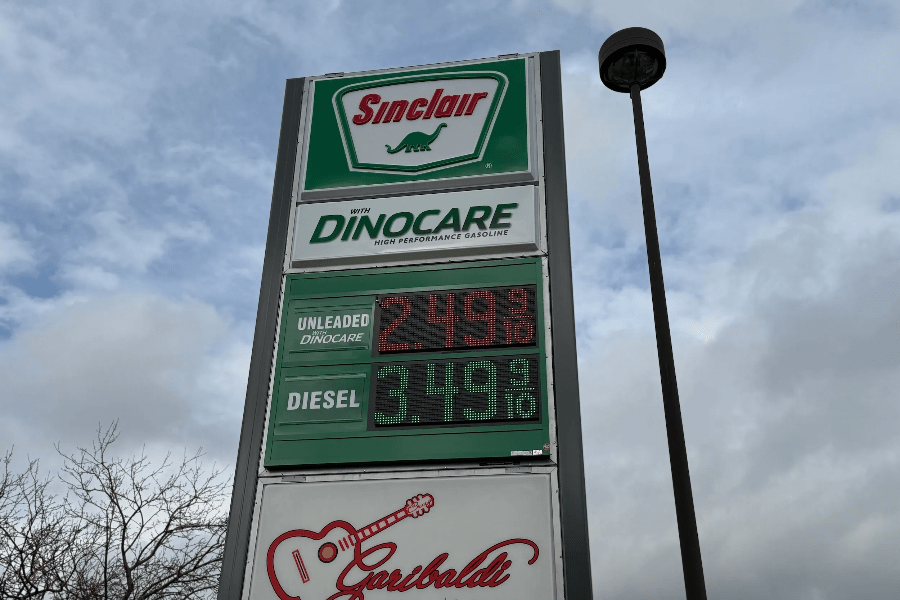
Fill your tank now, Colorado, as war in Iran drove up the state’s average gasoline prices by more than fifty cents since last week, and the trend isn’t expected to reverse.
“In Colorado, I don’t think it’s a secret to anybody that pump prices are on the rise,” says AAA spokesman (and Westword contributor) Skyler McKinley. “Prices will continue an upward climb. The question is the extent, and how long?”
The current national average gas price, $3.478 per gallon, is still higher than in Colorado, but McKinley says that Colorado’s prices have “climbed faster than the national average” since last week. Last week, the statewide average price per gallon at the pump was $2.889, according to AAA fuel price estimates. As of Monday, March 9, Colorado gas prices were estimated at $3.411. That’s almost 25 percent higher from prices month ago, when Colorado gas was at $2.733 per gallon.
Wartime Oil and Export Challenges
The jump at the pump owes largely to “international uncertainties” in the wake of war in Iran, which started with the bombings by United States forces that killed the country’s leader, Ali Khamenei. Not only is Iran a major oil producer, McKinley notes, but the country’s southern border touches the Strait of Hormuz, which other oil-producing nations, like Iraq and Kuwait, use to export oil. That has far-reaching consequences for gas prices, McKinley points out.
“About a week ago, we saw the markets jump as a function of traders pricing in that uncertainty to the cost of a barrel of oil,” he says. “A week on, we’re seeing a potential prolonged closure of the Strait of Hormuz, a potential long conflict and there are concerns about getting oil to the market.”
However, the “substantial jump” is also the result of other factors, according to McKinley.
“Summer Blend” Gasoline And Warm Weather Also In Play
March marks the beginning of routine, federally mandated switches at oil refineries to the production of “summer blend” gasoline, which produces less smog.
“This is when prices are generally on the rise, with anticipated increases beginning in March,” McKinley explains. “A lot of refineries come offline this time of year to switch over to summer blend, which costs about fifteen cents per gallon more at the pump.”
Colorado’s unsettling dry winter and the start of spring break season boost the demand for gasoline too and, in turn, the cost, as motorists hit the road looking for fun in the sun.
“The abnormally dry year we’ve had has colored the [jump in gas prices] more intensely,” McKinley says. “When weather is comparatively temperate or even balmy, folks are more likely to spend more time in their cars going to more places, and all of that increases demand.”
The average cost per gallon in the Denver metro area was $2.862 last week, according to AAA, but with the average now at $3.424, the price to fill up will seem a mile higher.
Similarly, the Colorado Springs metro’s average went from $2.859 last week to $3.421 as of Monday, AAA data shows. In the Boulder-Longmont metro area, gas went from $2.904 to $3.391, making it one of the cheaper places to currently buy gas, along with Grand Junction at $3.372 and Greeley at $3.384.
Higher Diesel Prices Hurt the Economy
Diesel gasoline, which powers heavy machinery, semi-trucks and large pick-ups, has also risen in price in Colorado, from $3.521 last week to $4.289 this week, according to AAA. Most drivers fill their car with regular unleaded gasoline, “which is the foundation of the household budget when it comes to transportation,” McKinley notes, “but diesel is really increasing, and diesel is the foundation and fuel of the American economy.”
The higher price of diesel gas will increase the cost of “just about everything,” McKinley notes, as it directly impacts trucks that deliver food, goods and materials across the country. “When diesel gets more expensive, everything gets more expensive,” he says.
When the war in Ukraine began, gas prices similarly soared by sixty cents in the following weeks before coming back down, McKinley recalls. He’s optimistic the same trend will follow, but it still relies on uncertainties.
“That revolves around very complicated questions in a region where there are a lot of open questions,” McKinely says. “It certainly feels like we’re living in extraordinary times.”
Ways to Save on Gas
McKinley says that motorists should consider taking a bus, riding a bike or simply staying home to save money during the rise in oil prices.
“The state and municipalities have invested heavily in infrastructure for other modalities,” he says. “Now is a great chance to try it out. Ride the bus. Try walking. Try biking. Try it one day per week. That’s the most appreciable way to save.”
For folks who rely heavily on their car but are willing to try “a lot ways to save a little,” McKinley suggests removing ski racks and other unneeded items from their cars to increase gas mileage. He also suggests being “strategic in how you get your gas” by sticking to the cheapest gas stations.
“Costco and Sam’s Club don’t mark up their fuel, so if you’re already going there for groceries, it’s a good place to fill up,” he says. “The service stations in your neighborhood will have more competitive prices than some do along the highway.”